Monday, September 28, 2015

DEADLIFTS AND SQUATS part 1

PURPOSE
The purpose of this article is to help clarify the technical requirements necessary for safe execution of the deadlift and squat family. There is some confusion regarding the principles of these movements. Difficulty in performing these exercises can be the culmination of several factors to include the skill level of the athlete, effectiveness of their training sessions, and comprehension of movement cues3.

SAFETY
Safety is always paramount in any resistance training program. The use of a spotter(s) is important when training with free weights. The job of the spotter is extremely important therefore they should be a knowledgeable individual who can assist in the proper execution of the exercise. The spotter is charged to ensure the athlete completes each repetition with good form and assist in completion as needed.
DO NOT ATTEMPT TO LIFT MORE THAN YOU ARE CAPABLE WITH EXCELLENT TECHNIQUE. A breakdown in technique is synonymous with bio-mechanical failure. There may have been a critical shift in prime mover recruitment that may lead to joint dysfunction and injury.

POSTURE
The hip hinge
The optimal alignment of the body will enable the athlete to produce the greatest force with minimal impact on the lumbar spine. Poor posture during the deadlift will increase stress on the lower spine L-5 to S1. There is no “magic position” that fits all lifters. However, the strength and conditioning professional should train the lifter to obtain a natural lumbar curve with a slight flattening of the back. Terminate the exercise in the event of posture failure. The lifter should be instructed to stop and reset by bracing, drawing-in, and pulling shoulder blades together (scapular retraction). The lifter should practice getting into proper lifting posture before attempting to lift from the floor. It is acceptable to elevate the load if proper lifting posture is difficult to obtain. The majority of persons will find it easier to obtain the sumo deadlift position (feet wide and hands inside knees) compared to the conventional deadlift7. The Sumo deadlift promotes a neutral spine and minimizes segmental movement8. Some texts will indicate a slight to hyperextension of the neck as part of starting posture. It is recommended to maintain a natural neck position. Cervical stability is important to prevent altered reciprocal inhibition between cervical flexors and extensors. Inactivity of the deep cervical flexors resulting from the overuse of cervical extensors may contribute to head protrusion and chronic neck pain10.

THE HIP HINGE    

The deadlift requires the technical ability to perform the hip hinge movement with spinal stabilization6. The hips should travel backward as the shoulders move forward maintaining spinal neutrality. The knees should remain virtually vertical. A common error is the bending forward of the thoracic spine instead of initiating the movement at the hip. Attempting to load the musculoskeletal system in this fashion will increase forces in the spine and reinforce faulty movement patterns. Mastery of the technique is crucial for progression toward Olympic lifts6,11.
 
THE CONVENTIONAL DEADLIFT
One of the BIG 3 exercises to develop total body strength. It is one of the foundational movements for many sports and exercise activities. Deadlift is a broad term used to describe a large family of exercises. The deadlift is a lower body/multi-joint exercise that focuses on the gluteus maximus, spinal erectors, hamstrings, quadriceps, trapezius, rhomboids, deltoids, hip adductors and finger flexors.  According to Piper et al., there are eleven variations of deadlift14. Each variation has a specific muscular focus. The conventional deadlift (DL), Romanian deadlift (RDL), stiff legged deadlift (SLDL), single leg deadlift, and sumo deadlift (SDL) are our focus for this discussion.
There are some differences between the DL and SDL starting postures. McGuigan et al. (1996) observed 29 Olympic contestants (19 DL and 10 SDL) discovering the SDL competitors maintained a more upright posture and reduced bar travel compared to the DL competitors. It is accepted maintaining a neutral spine reduces movement and shear force in L4/L5. There is a higher degree of spinal erector activity during the DL9. Advocating the importance of establishing proper static and dynamic posture.

EXECUTION

       Starting position


·Standing with feet, flat, shoulder width apart and toes forward or slightly pointed outward.
·         Bar on the floor resting against the shins or within 1 in (3 cm).
Common error: Rounded back

·         Lower down and grasp bar. Feet remain shoulder width apart, and hips should be below shoulders but higher than knees.
·         Weight evenly distribute body weight between mid-foot and heel with a preference for the heel.
·         Shoulders should be over the bar with arms falling vertically in line with the tibia.
·         The grip is pronated or alternated and slightly wider than shoulders.
·         Use a closed grip on the bar.
·         Back should be flat maintaining the natural curvature of the spine.
·         Head remains in line with spine. Not flexed or extended.
·         Elbows fully extended.

Ascension Phase

·         Chest up and out
·         Arms remain straight
·         Lift the bar off the floor by extending the hip and knees simultaneously.
·         Keep the angle between the torso and floor consistent until the bar is above the knee.
·         Maintain a neutral spine position keeping the bar as close to shins as possible.
·         Do not allow the hips to raise faster than nor before the shoulders.
·         Begin to extend trunk once the bar is at the top of knees. Move hips forward to come to a fully erect position. Continue to maintain a neutral spine.
Note: The abdominal cavity should be pressurized until the bar is above the knees before exhaling and breathing normally.

Descending Phase

·         Maintain neutral spinal position.
·         Inhale during descent.
·         Allow the hips and knees to flex allowing hips to travel backward. Avoid increasing curvature of the lumbar spine.
Excessive lumbar extension
·         Return bar to the original starting position.

 Common errors

·         Hyperextension of neck
·         Rounding of shoulders and back
·         Flexing of elbows or pulling with trunk
·         Raising hips faster than the bar
·         Pulling bar against the thigh
·         Excessive lumbar spine extension at completion


Next: The Romanian Deadlift


References

1.      Duba, J. (2007, October). A 6-Step Progression Model for Teaching the Hang Power Clean. National Strength and Conditioning Association, 29, 26-35. Retrieved September 19, 2015
2.       Graham, J. F. (2000). Exercise: Deadlift. Strength and Conditioning Journal, 22, 18-20. Retrieved September 19, 2015
3.       Bigelow, C. (2015). Thoughts on motor control. Phoenix.
4.       Bird, S., & Barrington-Higgs, B. (2010). Exploring the Deadlift. National Strength and Conditioning journal, 32, 46-51. Retrieved September 19, 2015
5.       Chandler, T. J., & Brown, L. E. (2013). Conditioning for Strength and Human Performance (Second ed.). Philadelphia, Pennsylvania, United States of America: Wolters Kluwer Lippincott Williams & Wilkins.
6.       Cook, G. (2010). Movement. Functional Movement Systems: Screening, Assessment and Corrective Strategies . Aptos, California, United States of America: On Target Publications.
7.       Cook, G. (2015, May 29). Squat vs. Deadlift: Which should you choose? Functional Movement Systems . Retrieved June 8, 2015
8.       Escamilla, R. F., & Francisco, A. C. (2002, April). An electromyographic analysis of sumo and conventional style deadlifts. Medicine & Science in Sports & Exercise, 34(4), 682-688. Retrieved September 19, 2015
9.       McGuigan, M. R., & Wilson, B. D. (1996). Biomechanical Anaylsis of the deadlift. Strength and Conditioning Journal, 10(4), 250-255. Retrieved September 20, 2015
10.   NASM. (2014). NASM Essentials of Corrective Exercise Training. Burlinton, Massachutes: Jones & Bartlett.
11.   National Academy of Sports Medicine. (2015). NASM Essentials of Sports Performance Training (First revised ed.). (M. A. Clark, S. C. Lucett, & B. G. Sutton, Eds.) Burlington, Massachusetts, United States of America: Jones and Bartlett Learning.
12.   National Strength and Conditioning Association. (2008). Essentials of Strength Training and Conditioning (Third ed.). (T. R. Baechle, & R. W. Earle, Eds.) Champaign , illinois, United States of America: Human Kinetics.
13.   National Strength and Conditioning Association. (n.d.). Exercise Technique: Deadlift. Retrieved September 19, 2015, from National Strength and Conditioning Association: http://www.nsca.com/Videos/Exercise_Technique/Exercise_Technique__Deadlift/
14.   Piper, T. J. (2001, June). Variations of the Deadlift. National Strength & Conditioning Journal, 66-73. Retrieved September 19, 2015


Tuesday, September 22, 2015

THE ADVANTAGE OF BATTLING ROPES


The use of ropes in conditioning is not a new concept. However, the use of ropes in an undulating method has gained traction in the fitness industry. The biggest question is how effective are Battling Ropes compared to other body weight exercises and conventional free weight exercises. The answer may surprise you.
Member performing the double arm wave
Battling Ropes increase cardiovascular and metabolic conditioning as well as increasing strength endurance levels. They are classified as a high-energy exercise 1. Another study compared the effects of 13 exercises (7 free weight, 5 body weight, 1 battling ropes circuit) for metabolic impact on the body 2. The study concluded that Battling Ropes ranked highest followed closely by the burpee. Battling ropes out shined deadlifts, lunges and bench press exercises.  It is interesting to note that a greater impact was discovered when Battling Ropes were coupled with Kettlebell swings or deadlifts. The highest metabolic impact came from a Battling Rope, deadlift, and squat combination 2. Additionally, it was discovered that shorter rest periods enhance the energy expenditure of battling rope exercises 3. Battling Ropes incorporate a great deal of upper body primarily. One study discovered that a 10 min Battling Ropes session consisting of a 1:3 work/rest ratio yields an average of 86-94% of max heart rate
There are endless programming combinations utilizing Battling Ropes. Overall, the best come from pairing Battling Ropes with lower extremity exercises. Battling Ropes are perfect if you are looking for exercises that deliver top return on effort. 

Look for me to write more on the subject in future posts. Better still, come out to Page Fitness Watertown, NY 13601 (315) 786-8032 and participate in our Kettlebell/Battling Rope classes.

Live well everyone,
-Reuben

References

1.      Fountaine, C. J., & Schmidt, B. J. (2015, April). Metabolic cost of rope training. Journal of Strenght and Conditioning Research, 29, 889-893.
2.       Ratamess, N. A., Rosenberg, J. G., Klei, S., Dougherty, B. M., Kang, J., Smith, C. R., . . . Faigenbaum, A. D. (2015, January). Comparison of the Acute Metabolic Responses to traditional Resistance, Body-weight, and Battling Rope Exercises. Journal of Strength and Conditioning Research, 29, 47-57.
3.       Ratamess, N. A., Smith, C. R., Beller, N. A., Kang, J., Faigenbaum, A. D., & Bush, J. A. (2015, September). Effects of rest interval length on acute battling rope exercise metabolism. Journal of Strength and Conditioning Research, 29, 2375-2387.


Sunday, September 6, 2015

WHY WE SHOULD FOAM ROLL

Hello everyone,
I want to take a minute to discuss the benefits of foam rolling. Also known as self-myofascial release (SMR) or ischemic compression therapy, it is a means to manipulate tight muscles and get them to relax. This technique is used before or after exercise.  I will refer to it as SMR for the rest of this post.

CONTRAINDICATIONS OF SMR

Certain situations prohibit SMR. The presence of any malignancy or tumor growth, Osteoporosis, Osteomyelitis, history of congestive heart failure, or acute rheumatoid arthritis is unsuitable for SMR. Ask a fitness professional if you are unsure if your condition prohibits SMR. Do not perform SMR, ischemic compression, soft tissue release or active release if prohibited by your medical provider.
Perform SMR only on muscles identified as overactive as the result of a fitness assessment. The proper application of SMR assists in correcting joint movement dysfunction created by injury, poor posture, and repetitive motion5.

DAVIS’S LAW

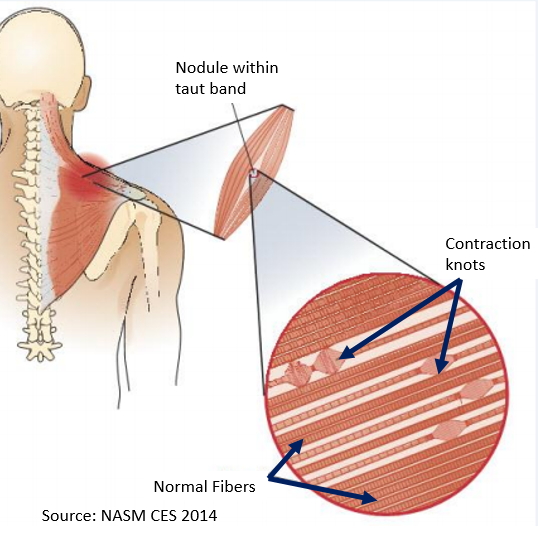
Overactive muscles signify areas where tiny cramps (also called knots, or trigger points) have altered the ability of the muscle fibers to contract properly. Over time, these knots can permanently alter intramuscular coordination by forming collagen bonds across the direction of muscle fiber contraction. Known as Davis’s law, the knots will change movement properties of joints. You can observe compensations in dynamic movement during some exercise4. For example, inward movement of the knees during the “up” phase when performing a squatting technique. The proper muscular-joint function should allow the quadriceps and gluteal group to do most of the lifting. However, the dysfunction has caused the muscles in the inner thigh and outer lower leg to take over for the bigger muscle. Movement compensation could be why a simple movement results in long-term pain (reaching for a can of beans and throwing out your back).

WHAT DOES SMR DO?

SMR impacts multiple systems of the body to create muscle relaxation. The application of varying degrees of pressure addresses specialized organelles called mechanoreceptors. The Golgi tendon organ (GTO) and muscle spindles (MS) are the primary targets of SMR3,5. Although, SMR brings about changes in the central nervous system as a whole. Reducing the impact of knots is achieved by continuous application of high pressure for up to 30 seconds or lighter pressure applied for up to 90 seconds. Judge intensity by your pain tolerance level2.You can manipulate pressure by using different types of release tools. Harder materials will increase tissue pressure as softer materials reduce pressure. There are devices like rumble rollers that provide intense localized pressure for deep knots. Choose the one that fits your fitness needs and preference best. Soft tissue manipulation initiates changes in tissue response. SMR stimulates the central nervous system (skeletal muscles) and the autonomic nervous system (hypothalamus, general muscle tone) to relax the entire body via fascia5. SMR after intense exercise can proliferate a return to normal heart rate and diastolic blood pressure 1.
© NASM 2014 Foam Rolling  Calves
I recommend performing SMR daily. As a preventative measure, SMR should be used as part of a thorough warm up plan. I recommend SMR after tissues are warm-up and before vigorous exercise. Some research suggests that SMR can be performed before a warm-up AND before vigorous exercise. It is best to try both and make adjustments to which works best for you. 
That is all for now. I’ll touch back on foam rolling and flexibility in later posts.

Stay healthy everyone,
Reuben


References

1.      Arroyo-Morales,, M., Olea, N., Martinez, M., Moreno-Lorenzo, C., Daz-Rodrguez, L., & Hidalgo-Lozano,, A. (2008, March). Effects of Myofascial Release After High-Intensity Exercise: A Randomized Clinical Trial. Journal of Manipulative and Physiological Theraputics, 31(3), 169-254. doi: http://dx.doi.org/10.1016/j.jmpt.2008.02.009
2.       Hou, C. -R., Tsai, L. -C., Cheng, K. -F., Chung, K. -C., & Hong, C. -Z. (2002, October). Immediate Effects of Various Physical Therapeutic Modalitieson Cervical Myofascial Pain and Trigger-Point Sensitivity. Archives of Physical Medicine and Rehabilitaiton, 83, 1406-1414.
3.       Jami, L. (1992, July 1). Golgi tendon organs in mammalian skeletal muscle: functional properties and central actions. American Physiological Society, 72, 623-666.
4.       NASM. (2012). NASM Essentials of Personal Fitness Training (Fourth ed.). (M. A. Clark, S. C. Lucett, & B. G. Sutton, Eds.) Baltimore, Maryland, United States of America: Lippincott Williams & Wilkins.
5.       NASM. (2014). NASM Essentials of Corrective Exercise Training. Burlinton, Massachutes: Jones & Bartlett.


Wednesday, September 2, 2015

EXERCISE AND LOW BACK PAIN

What is Low Back Pain?

Low back pain is defined as pain and discomfort, localized below the costal margin and above the inferior gluteal folds. This is a fancy way of saying between the bottom middle of the back to the bottom of your butt cheek.  For the sake of my terrible typing skills, I will refer to low back pain as LBP. It is reasonable to estimate that every American will experience some form of LBP at least once in a lifetime. The reality is much harsher. Upwards of 70% of persons in most industrialized countries will experience LBP that may or may not radiate down the leg. 
LBP can be caused by an injury or biomechanical breakdown. LBP due to infection, tumor, osteoporosis, ankylosing spondylitis, fracture, etc. must be cleared by your physician or therapist before beginning an exercise program.  Non-specific LBP is the most common form. This is because there is no obvious cause for the chronic or acute symptoms. This type of LBP can usually be addressed through the intelligent application of a progressive corrective exercise program.
Chronic LBP is a leading cause of medical facility visits each year costing billions of dollars annually in lost days of work, reduced quality of life, and increased health care expenses.

© Dirima | Dreamstime.com

Non-specific LBP and Exercise

It is suggested that regular exercise is an effective measure to combat chronic LBP. Millions of people sidelined by nonspecific LBP because it hurts to move. I realize pain tolerance is very unique to each of us, but we should resist the urge to sit still. Some people can “fight” through the pain while others fully succumb to it. Either way, the issue can be addressed through intelligent program design. Most cases of nonspecific LBP do not require hospitalization or even physician care. Modification of exercises can help manage the symptoms. If you do decide the pain is too much take the time off but set a realistic and quick return time. This time should be with or without discomfort still present.  The reason is that we need to practice strengthening core musculature through deliberate application of specific exercises.

Non-specific LBP program design

We should always realize that all pain management is specific to the individual. What exercises help person “A” may increase pain in person “B”. For this reason, I believe you should seek out a certified corrective exercise or functional movement professional to assess which exercises will be right for you. Again, if you are under the care of a medical professional then stick to their exercise prescription.
Research supports incorporating multiple forms of exercise. Try different positions and variations to find what works best for you.  Chronic or reoccurring LBP that is not indicative of a greater injury can be used as a guide to assess program effectiveness. Remember, be patient with your program. The dysfunction did not happen overnight, and the correctives may take 3 months or longer to take hold.
The focus of the program should be geared toward muscular endurance rather than strength. Core stability is a systemic harmony of muscle contraction and relaxation to maintain static and dynamic posture. The majority of low back injuries happen during fatigue.
Well, that is all for today. Look for me to write more on low back pain in the future.

Live healthy everyone,


References

American College of Sort Medicine. (2009). ACSM's Exercise Management for Persons with Chronic Diseases and Disabilities. Champaign, Illinois: Human Kinetics.
American College of Sport Medicine. (2014). ACSM's Guidelines for Exercise Testing and Prescription (Ninth ed.). Baltimore, Maryland, United States of America: Wolter Kluwer Lippincott Williams & Wilkins.
McGill, S. M. (2003, March). Enhancing low back health through stabilization exercises. Retrieved September 1, 2015, from American Council on Exercise: http://www.acefitness.org/pdfs/lowbackstabilization.pdf
Powers, S. K., & Howley, E. T. (2012). Exercise Physiology: Theory and Application to Fitness and Performance (Ninth ed.). New York, New York, United States of America: McGraw Hill.
Web MD. (2010). Living with Low Back Pain. (B. Nazario, Ed.) Retrieved September 1, 2015, from Web MD: http://www.webmd.com/back-pain/living-with-low-back-pain-11/causes?page=3


Friday, March 13, 2015

Facts about Carbs

Carbohydrates have about 4 calories per gram and are the chief source of energy. They are protein sparing, and when functioning properly, the human body will use carbs to burn fat through oxidation. Carbs are easily stored in the muscle and liver in the form of glycogen (which is the stored form of glucose). This makes carbs a quick source of energy.
You should try to consume about 55% of your daily caloric intake from carbs (for the average person. Up to 65% for athletes). Symptoms of carb depletion begin with a loss of focus because the peripheral and central nervous systems (brain and spine) are carbs dependent. This is followed by muscular fatigue as glycogen stores are depleted. It is strongly recommended to eat a properly balanced meal every 3 to 4 hours to maintain optimal blood glucose levels and avoid mental and muscular fatigue.

Live healthy,
-Reuben


The Set Point Theory

©Keith Robinson -Dreamstime Stock Photos
am sure you can think of several people you know who have lost a substantial amount of weight (via a breakthrough diet plan, etc.) only to gain it back over the subsequent months or years. One reason for this is the “Set Point Theory”. This theory hypothesizes that each of us has a pre-programed weight, possibly because of lifestyle choices or genetics. A higher set point means that the individual will carry a greater amount of weight. The body will resist programming contrary to the set point. This is even greater when trying to lower the set point. So, when you lose weight (especially large amounts over a short amount of time) the body will return to its familiar level of homeostasis, or its normal setting. I listened to a seminar that explained it like this; the set point is like the thermostat in your home. You set the house temperature to 98.60 (yeah, some like it hot). You get too warm and decide to cool off by opening the windows (fad dieting). This effectively cools the environment, but your thermostat is still set to 98.60. As soon as you close those windows you’re going to go right back to 98.60 in a short time. The proper method would be to change the thermostat to a lower temp (proper dieting). Now you can continue with normal activities and not worry about maintaining proper temperature.

So remember, to effectively change your weight over the long term, shoot to lose .5 to 2 lbs weekly. Exercise regularly and eat proper portion sizes at least four times a day (three balanced meals plus a healthy snack or two between meals).

Live healthy, everyone!


Reuben

Saturday, February 21, 2015

Never Give Up

I tire of all the Infomercial type ads on Facebook and abroad. I just saw another advertisement for a plant extract that can increase muscle growth 700%. I doubt the validity of its claim. Let’s just accept the facts America. You DO NOT need steroids. You DO NOT need a miracle drug, or to starve yourself to death. What you need is dedication to achieving the proper information for your goal. We have reached a place in America that many of us want EVERYTHING without the effort required to achieve it.
The images of people I post (with the exception of some old school bodybuilders) achieved their bodies through hard work and perseverance. In fact, there is an entire breed of steroid free bodybuilders who successfully push their bodies to its genetic maximum. They are amazing, dedicated and 100% natural.
I hope to energize this page with knowledge and insights to inform you in proper exercise management. For example, did you know that hypertrophy (muscle growth) does not come from pushing heavy weight all day long? Hypertrophy comes from the calculated use of sets, weight, repetitions, rest intervals and speed of movement.
I overhear people in the gym talking about “what they know”. The longer I listened, the more aggravated I became. These are the same people doing the same routine day after day and expecting a different result each time. They refuse to look into what is preventing progress. This is usually when talk of “exotic vitamin” usage comes in to play. The reality of the matter is much simpler. Effective and long term physical change take time and the correct application of acute variables. 
 Anyone (that is not suffering from a medical or physical anomaly) who leaves a sedentary lifestyle to begin an active lifestyle will quickly show improved neuromuscular adaptation (improved coordination, weight loss, strength gains, etc.). IT IS THE TIME AFTER THE “HONEYMOON” WHICH MAKES OR BREAKS THE DESIRED GOAL. After the initial “shock” the body learns and remembers. Your progress then screeches to a crawl. The solution to this goes beyond simple “muscle confusion” (yeah, I know that is what a few of you were thinking thanks to mass produced programs like “Insanity” and “P90X”). Let me put it to you this way; would you use the same “muscle confusion” techniques as a marathon runner if your goal is to improve striking power and speed in MMA? If so, why or why not? What would you change, or what would you do the same, and why?
If you are able to answer that question with facts, then you may not benefit from my insights. However, if you cannot answer those questions then follow my posts here and “Personal Training with Reuben” on Facebook